0of17read0 XP
Paying Yourself
Turn any savings balance into a safe monthly paycheck in dollars, and trace where that number comes from — starting with the dollar amount, then working backward to the rate that describes it
- Time
- 20–25 min
- Type
- exercise
- Bloom
- Understand → Understand
- XP
- 100

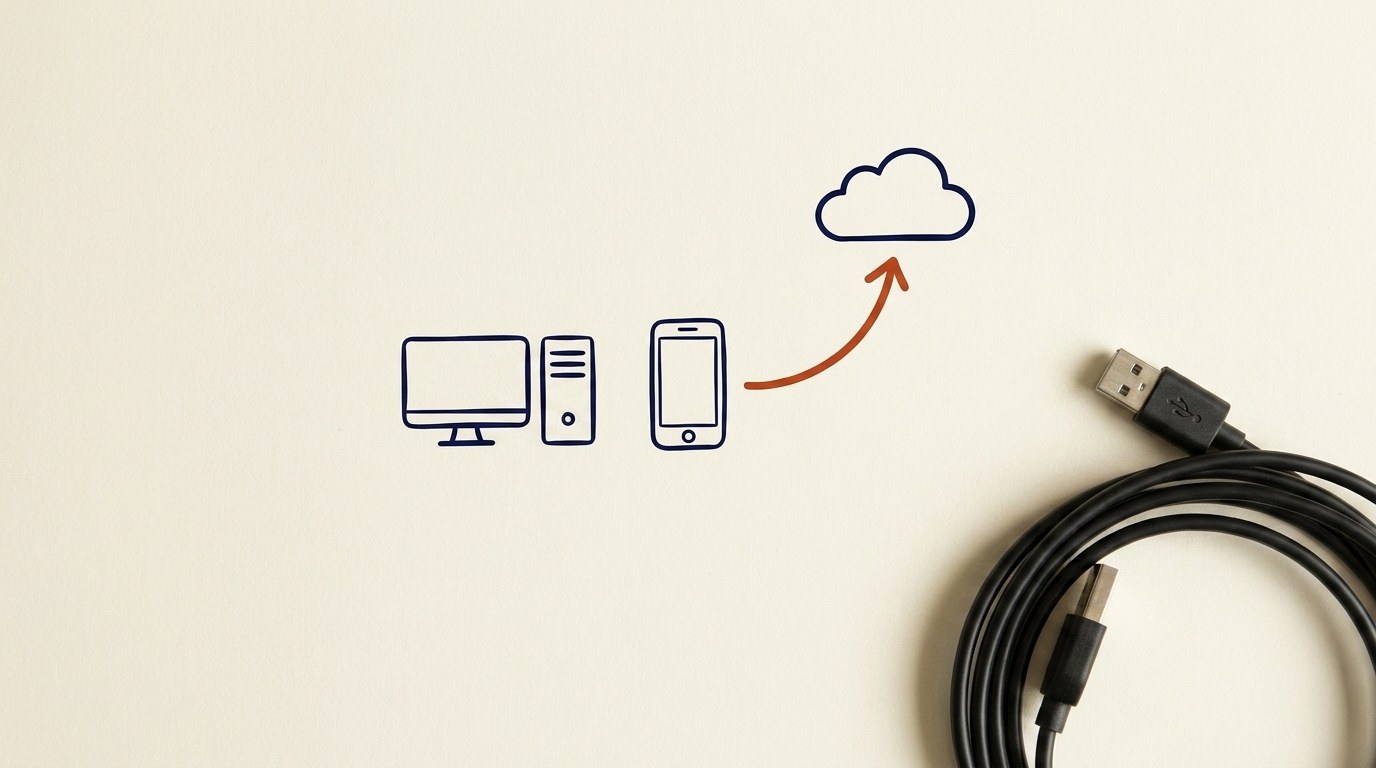
Architecture diagram for Paying Yourself. Dark-background SVG, gold-on-near-black. A horizontal 'paycheck corridor': center line in bright gold labeled 'Your starting paycheck (balance × 3.9% ÷ 12)'. Upper guardrail line in muted gold with a small lock icon labeled 'Upper threshold — decided in advance' and an arrow pointing UP labeled 'Good year: planned raise'. Lower guardrail line in muted gold with a small lock icon labeled 'Lower threshold — decided in advance' and an arrow pointing DOWN in GREEN labeled 'Bad year: planned trim — THE PLAN WORKING' with a small green checkmark. Below the corridor, a 100-person icon array (10×10 grid): 90 icons in gold labeled 'About 90 of 100 possible savings paths never run out of money'; 10 icons in dim gray. One gold icon inside the 90-group circled with a highlight and captioned 'Any balance, same method'. Plain dollars-and-method framing — applies to any saver. No photographic faces.
You'll be able to
- Turn any savings balance into a safe monthly paycheck in dollars and trace where that number comes from — starting with the dollar amount, then working backward to the rate that describes it
- Name both research benchmarks — William Bengen's 4% Rule from 1994 and Morningstar's current 3.9% guidance — and explain in plain language why today's safe starting rate is slightly lower (lower expected bond returns than the historical periods Bengen studied) [^1] [^2] [^3]
- Define withdrawal rate in one sentence: the share of your savings you take out each year to live on
- Describe how guardrails work — a planned raise in good years, a planned trim in bad years — and explain why a trim is the plan working (executing a pre-written rule while you were calm), not the plan failing
- Read a transfer scenario — a proposed withdrawal amount from a given savings balance — and identify whether it aligns with the guideline by applying the current rate and comparing the dollar amounts
Key concepts · tap to reveal
1/17·Watch·Beat 1 · Hook
0%
Hook
For every $10,000 you have saved, how much can you safely take out each year?
Your task Write a prompt that asks Claude to recommend the right AI setup for a real task you're facing — then weigh its answer against this lesson, "Paying Yourself."
a strong prompt:role · context · task · format · example
Exercise · scenario
# Scenario — A Friend's Plan A friend has $90,000 saved. They are taking $4,200 this year because 'the market has been great and I want to enjoy it while I can.' They have not set up guardrails. Work through the numbers: **Step 1 — What does the guideline say?** > 3.9% × $90,000 = $3,510/yr = about $293/month They are taking $4,200, which is: > $4,200 ÷ $90,000 = **4.67%** — well above the current safe-starting guidance **Step 2 — What is the risk?** At 4.67%, they are drawing faster than the guideline rate supports. If the market has a bad stretch in the next few years — which is unpredictable — they will be selling more pieces of their savings at low prices to fund each month's paycheck. That digs a hole that is hard to climb out of even when the market recovers. **Step 3 — What would you tell them?** Three things: (1) Both the 4% historical ceiling and the current 3.9% guidance are starting points — their $4,200 is above both; (2) A good year is the best time to set guardrails, not to exceed them — because next year may not be a good year; (3) The trim they avoid this year may become a much larger cut later if the savings depletes faster than planned.
Deliverable
Fill in these four fields in writing: **Your starting paycheck:** $____________/month (Take 3.9% of your current balance, then divide by 12. Example: $10,000 × 3.9% = $390/yr = about $33/month.) **Your guardrail raise rule:** In a good year, if my savings grows by ______%, I will take a raise of $______/month, bringing my paycheck to $______/month. **Your guardrail trim rule:** In a bad year, if my savings drops by ______%, I will trim by $______/month, bringing my paycheck to $______/month.
Practice · Scenarios
0 of 8 revealed
Scenario 1 of 8
Morningstar's current withdrawal rate guidance is 3.9% — slightly below Bengen's 4%. Why is the current safe starting rate lower than the historical one? (This is the difference between $40 and $39 per year for every $1,000 saved.)
Sources
- [1]Unknown source·Unknown source (2026) · Vendor
Submit your work for review
Paste your capstone artifact below. You'll get back a 4-level rubric grade, per-criterion feedback, and three concrete edits to strengthen it.